The localisation paradox
Every international brand faces the same fundamental tension: the brand equity that drives recognition and trust is built on consistency, but the audience behaviours, cultural contexts, and platform mixes that determine marketing effectiveness vary significantly by market. Too much consistency produces global campaigns that feel generic and miss local nuance. Too much localisation produces local campaigns that erode the brand equity built through global presence.
The tension every international brand runs into
The brand equity driving recognition and trust is built by looking the same everywhere.
Markets have their own language, culture, competitors and buying behaviour, and ignoring that costs you the market.
The resolution of this paradox is a framework: a clear definition of what must remain consistent across all markets (the non-negotiable brand elements), what should be adapted to each market (the localisation layer), and what should be created independently for each market (the locally originated content layer). Different brands will draw these lines differently depending on the nature of their business, their audience, and the markets they operate in.
Non-negotiables: what must never change
Brand architecture elements that must remain consistent across all markets include the visual identity system (logo, colour palette, typography, photography style), the core brand positioning (what the brand stands for and for whom), and the messaging hierarchy (the ranked sequence of claims the brand makes about itself). These elements are the infrastructure of recognition. They are why a customer who encounters the brand in a new market immediately recognises it from their home market.
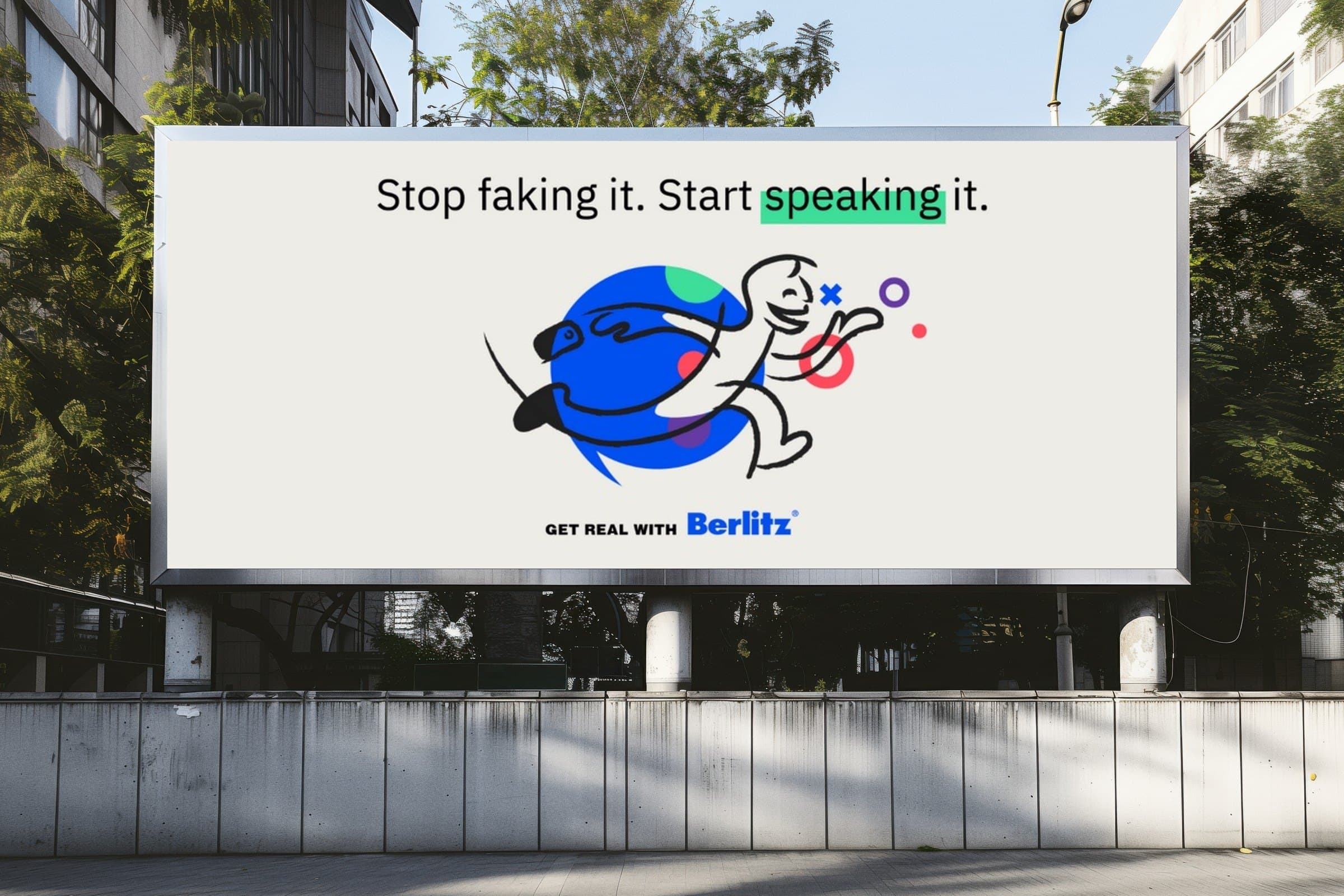
Consistency in these elements requires active governance as well as guidelines. Magic Pulpo’s international work for Berlitz across its franchise markets, Canada and the UK among them, includes a regular brand health review that assesses consistency across all active channels, catching drift before it compounds into incoherence.
The first two layers, and the line between them written down
The visual identity system, the positioning, the architecture. Governed actively, rather than written down once.
Language and tone, channel mix, creative references, offers and timing.
The localisation layer
Within the non-negotiable brand framework, effective localisation adapts the following: language and tone of voice (cultural register as well as translation: a German audience and a Latin American audience will respond to different communication styles even within the same brand framework), platform selection and format (LinkedIn may be the dominant B2B channel in the UK but significantly less so in certain Asian markets; short-form video platforms have very different audience compositions by market), seasonal and cultural calendar (campaign timing that aligns with local events, holidays, and cultural moments rather than simply replicating the home market calendar), and social proof and case studies (local market references carry more credibility than global ones for audiences making local purchasing decisions).
Practical lessons from Berlitz’s franchise markets
Magic Pulpo’s international work has produced a set of consistent findings that apply across sector and market type. Local language search drives significantly higher conversion rates than translated content for identical queries. Audiences who find content in their native language demonstrate higher purchase intent than those who encounter translated versions of global content. In the markets we have worked in, platform-native formats have done better than platform-agnostic ones. Content made for Instagram’s aspect ratios, caption lengths and engagement patterns has usually beaten adapted desktop content. And localised landing pages take the paid traffic. On the Canadian city and language pages built for paid search, 84% of non-brand leads and 88% of qualified leads land on a local page rather than the global one.
If you are expanding into new markets or optimising an existing international digital marketing programme, speak to the Magic Pulpo team.